
About five years ago I moved to Vienna from Chicago.
Early on, I asked my wife where people here hang out with their friends. She told me most of the time everyone meets somewhere in the city, and then afterward each person goes their separate way, back to their own home.
That was a world of difference from what I knew.
In Chicago, house parties are a huge thing. And when it wasn’t a big party, we were still at someone’s place. A basement, a garage, a backyard. We went out too, but mostly we were in someone’s home. That’s just where life happened.
Here, the home is not the meeting place. The city is.
The tuth.
I don’t have a lot of friends here. Almost none, if I’m being truthful about it.
Most of the people who come to our home are family from my wife’s side, or friends who were hers first and became mine over time. We host family mostly, and they come for the kids as much as for us. Friends come from time to time, but not often.
Part of that is just where we are in life. We spend so much of our time tending to what the kids need that there isn’t much left for ourselves, let alone for a social life. That’s true whether you live in a big house or a small flat.
The apartment definitely makes it harder. That part is real, and I don’t think people say it out loud enough.
What the small space actually does.
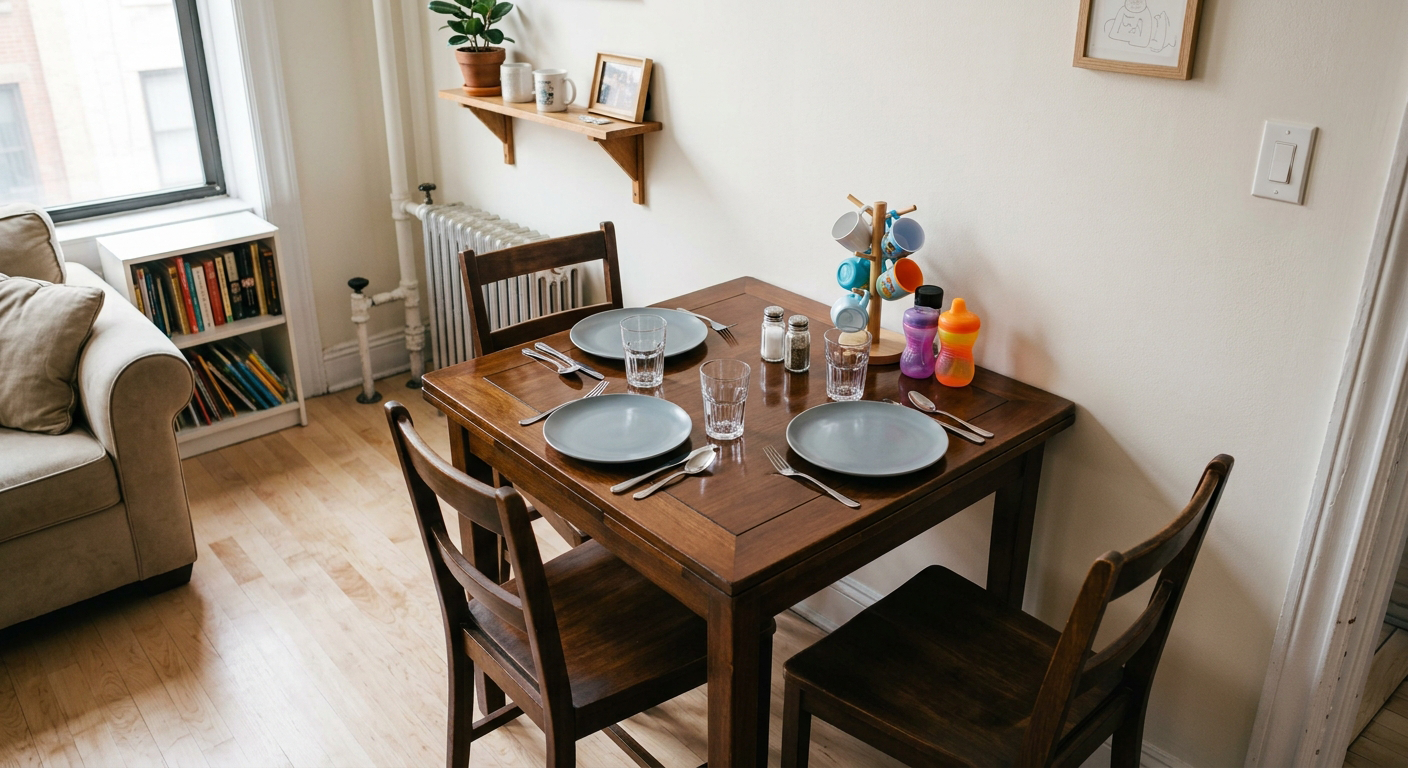
Our home is a mess. Not dirty, not filthy. Toys and kid things, everywhere. We do clean up before guests come, but the space still has to be reconfigured around the idea of anyone else being in it. Hosting isn’t a simple yes. It’s a project.
When there isn’t room to host easily, you stop offering. Not as a decision. It just quietly stops happening. Nobody announces that they’re going to have fewer people over. Your world contracts on its own, one small no at a time.
The result is that the home stops being a place you share and slowly becomes a place you retreat to. That’s a real loss, and it costs you something you don’t notice until it’s gone.
My architect point of view and what I have noticed.
Culture and architecture push in the same direction here, and it’s worth naming.
In cities with big homes, the home is the social unit. There’s a basement, a yard, a spare room, space that can absorb other people without anyone rearranging their life. In cities of small apartments, socializing moves out into cafés, bars, parks, public space. That’s not a flaw in the culture. It’s the built environment shaping how people gather.
Neither is wrong, but when you grew up with one and now live in the other, you feel the difference in your bones. And if the outside version doesn’t come easily to you, because you’re new, because you have small kids, because you’re tired, you can end up with neither.
The cost nobody mentions.
Here’s the part that’s been hitting us lately.
The lack of socializing is starting to take a toll. We’re always together, the kids and us, in a small apartment. People who are always in the same rooms with each other, without a wider circle to expand into, get on each other’s nerves. That isn’t a character flaw. That’s what happens when a small space and a small social world overlap.
We need friends partly so we have people to host. It sounds backwards, but it’s true. The hosting isn’t the goal. It’s the thing that would open the walls a little.

What actually helps.
I’m still working this out, so take these as honest attempts rather than answers.
Lower the bar for hosting. Not a dinner. Coffee. An hour. Toys still on the floor. The tidy-up-first instinct is often what stops the invitation from ever being made.
Use the outside as an extension of the home. In a city like this, the park is your yard. Meeting people there with the kids counts as a social life, even if it doesn’t feel like the one you knew.
Say yes to being the one who reaches out. When you’re the newer person in a city, the invitations mostly have to start with you. That’s tiring and it’s also the only way it changes.
Accept the format the city gives you. Meeting in town and then separating isn’t a lesser way to be friends. It’s the local way. Fighting it means having no social life while waiting for one that isn’t coming.
One thing to try this week.
Invite one person over without cleaning up first.
Or, if that’s a bridge too far, invite one person to meet you somewhere with your kids. One text. One low-stakes offer.
The point isn’t the specific plan. It’s breaking the quiet habit of not asking, because that habit is what shrinks your world without ever announcing itself.
Has your home stopped being a place you invite people into? And do you know when that changed?
Leave a comment or reply to the newsletter. I read every single one.
Leave a Reply