
Living Well: The Honest Home, Part 1 of 13 – Our Home Has a Problem. So Does Yours. Here’s Where We Start.
I’m going to tell you something I haven’t said out loud before.
Our apartment stresses me out.
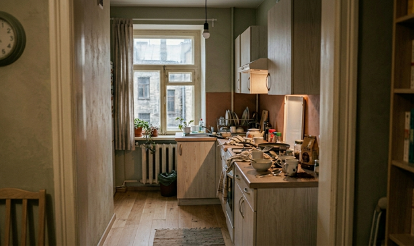
Not occasionally. Daily. The kind of low-grade tension that’s easy to dismiss because nothing is technically wrong… the rent is paid, the family is fed and healthy, yet something in the air of our home sits heavy. I notice it most in the morning, when we’ve cleaned everything the night before and within twenty minutes it looks exactly the same as it always does. Or at night, when I want to sit somewhere quiet and just breathe, and there isn’t really anywhere to do that.
My growing family and I live in a small apartment in Europe. One bedroom, bathroom, toilet and one main room that is simultaneously a kitchen, a living room, a wardrobe, and a play space. No view of the sky unless you press your face to the window. A balcony that faces a courtyard and works like a megaphone for noise. New floors that squeak in a place or two (fully renovated building less than two years ago). Lighting that drains rather than restores.
I’m not writing this for sympathy. I’m writing it because I suspect you know exactly what I’m describing.
Maybe your version is different. A house with too many rooms that never feel quite right. A flat that always feels dark no matter what you do. A bedroom that doesn’t feel like rest is possible in it. A kitchen that makes cooking feel like punishment. The specific details vary. The feeling underneath them is remarkably similar, a gap between the home you have and the life you want to live inside it.
This Is Not An Interior Design Problem

Here’s what took me a while to understand. The discomfort I feel in our apartment isn’t really about the apartment. It’s about what the apartment does to me, to my nervous system, my patience, my ability to be present with my family, my capacity to think clearly after a long day.
Cluttered spaces fragment attention. Poor lighting suppresses energy and mood. Constant noise keeps the body in a low level of alertness it was never designed to sustain. No private space means no recovery. These aren’t aesthetic complaints. They are real, documented, physiological effects that play out quietly in our homes every single day.
When tension rises at home over something small, it is rarely about the thing it appears to be about. It is usually about the accumulated weight of a space that doesn’t give anyone anywhere to decompress.
This is a mental wellbeing problem wearing the clothes of a home problem.
Why Most Advice Doesn’t Help
There is no shortage of guidance on this topic. Declutter your home. Add plants. Use warm lighting. Buy better storage. I’ve read all of it and I’ve even written some of it.
Time to try something new.
The problem is that advice without a starting point is just noise. When everything needs attention, being told to fix something doesn’t help, it adds to the overwhelm. The gap between “your home could feel better” and “here is the one specific thing to do today” is exactly where most people get stuck and give up.
That gap is what I want to close. For myself and for anyone reading this.
What We’re Going To Do About It

Over the coming months I’m going to work through every layer of this, one at a time, in public, as I figure it out. Not as an expert. As someone who lives this problem and is genuinely curious about what actually helps.
We’ll look at light, not just natural light but how you layer and design the light you do have. We’ll look at clutter not as a moral failing but as a systems problem. We’ll talk about noise, about nature deprivation in cities, about what happens to a family when private space disappears, and about the psychological weight of things you can’t control in your own home.
Each piece will come with something concrete and small. Not a renovation. Not an expense. A micro-action… one thing you could do today, or this week, that moves the needle just slightly in the right direction. Because that’s how this actually works. Not in one big transformation but in small, repeated improvements that slowly shift how a space feels to live in.
If you’re reading this from a home that doesn’t quite feel like yours yet, too small, too dark, too loud, too chaotic… you’re in the right place.
We’re starting from honest. Everything else comes after that.
What’s the one thing about your home that drains you most?
I’d genuinely like to know. Leave a comment or reply to the newsletter – your answer will shape where this series goes next.


Leave a Reply